Produce & Pantry
A Green Patina, a Rancid Whiff, or a Dented Lid: Four Checks for Tomato Puree That's Turned
Before you open another jar for Sunday sauce, read the surface, the lid, and the date line — these signs separate a good puree from one that's quietly gone bad.
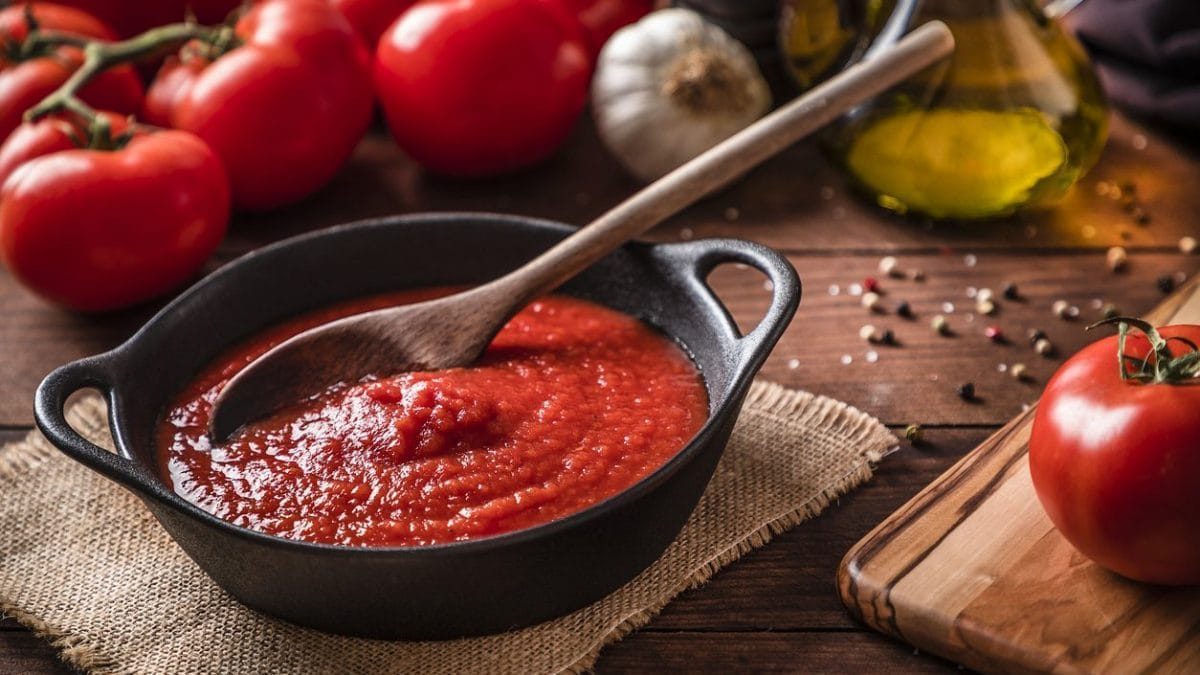
The Homemade Stakes: Sterilization Decides Everything
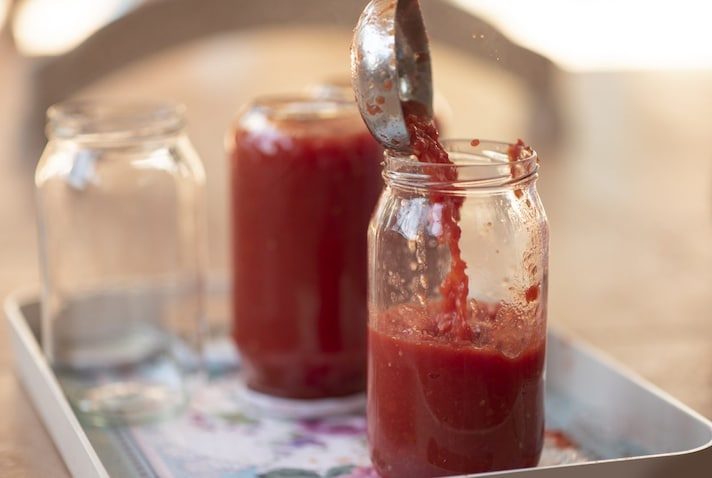
For anyone who boils down their own tomatoes, the payoff is a puree that tastes exactly how you like it — more acidic if you pick a firm San Marzano, sweeter if you lean on a ripe red cherry variety. But that control comes with one non-negotiable step: sterilizing the jars before you pour. Skip it, and you're inviting bacteria that don't just dull the flavor; they can make the whole batch unsafe. The process isn't obscure — wash the jars, submerge them in boiling water, and let them dry on a clean rack before filling. Even with that care, a homemade puree's shelf life stretches across many months' time, not years. The trade-off is that once you crack the lid, the clock starts ticking. A commercially produced jar may sit in your pantry for a year without complaint, but a homemade batch asks to be watched — not because it's inferior, but because its lack of preservatives means every sign of decay is honest and immediate.
First Warning: A Green Patina or Dark Spots
The visual test requires no guesswork. Open the jar and look specifically at two places: the surface and the bottom. If you see a sort of green patina spreading across the top layer, that's mold — it has colonized the exposed area, and the puree underneath is no longer good. The same applies if darker spots appear anywhere in the body of the puree, whether they're flecks or larger cloudy blotches. These aren't harmless color variations; they indicate microbial activity that has broken down the product's structure. In a well-preserved puree, the color is uniformly red — deep brick red for a reduced sauce, brighter for a fresh batch. When that uniformity is broken by green or brown, the damage is already done. Even scraping off the patina doesn't help, because the mold's roots and byproducts have likely threaded through the entire jar. The only correct response is to discard the contents and wash the container thoroughly — and then inspect your other jars from the same batch, because contamination rarely stops at one.
When the Nose and Tongue Disagree
Smell and taste form the second line of detection, but they need to be used together, not in isolation. Fresh tomato puree has an unmistakable scent — sharper than the finished sauce, but still recognizably tomato. If that aroma shifts into something rancid or sour, something is off. A rancid odor doesn't mean the tomatoes were old at harvest; it means the fats in the puree have oxidized or bacteria have produced off-flavors. But smell alone can be misleading, because some commercial purees have a naturally stronger tang that reads as sharp but is perfectly fine. So the test is sequential: if the color looks normal but the smell is odd, pinch a tiny amount on your fingertip and taste it. If it's unpleasant — bitter, metallic, or just 'off' — the product has been damaged beyond salvage. A puree that passes both the smell and taste check is safe to cook with, but don't push it: the flavor test only tells you about the current state, not how it will behave after an hour of simmering.