Braises & One-Pot Mains
12 Pot Roasts From Around the World Worth a Whole Sunday
From a week-long German marinade to a Croatian braise sweetened with prunes, these slow-cooked traditions prove every culture figured out how to make cheap cuts shine.
Brasato al Barolo
Piedmont, Italy's premier wine region, produces a pot roast that refuses to compromise on its braising liquid. Brasato al Barolo demands a full bottle of Barolo — the prestigious Nebbiolo-based wine that routinely costs $30 to $50 — poured over a seared chuck roast alongside the standard celery, carrot, and onion base. The aromatic profile leans warm: cloves, cinnamon, black pepper, bay leaves, and rosemary, with some cooks adding juniper berries or sage. Thigh cuts and veal can substitute for chuck, but the wine is non-negotiable. Hours of gentle braising reduce the expensive liquid into a sauce so concentrated it barely needs straining. The dish reads as extravagant, and the ingredient bill confirms it, but the technique is identical to any humble pot roast — proof that one luxurious substitution can reframe an entire tradition.
Sauerbraten
Germany's signature pot roast starts not at the stove but in a vinegar bath that lasts days. Sauerbraten — literally "sour roast" — calls for marinating beef in red-wine vinegar or wine-spiked vinegar for up to a week. Henriette Davidis, the celebrated nineteenth-century German cookbook author, prescribed eight to ten days of marination in winter, trimming the sentence to three or four days for summer cooks unwilling to swelter over a timeline. Bay leaves, cloves, thyme, peppercorns, and pickling spices build the seasoning. Davidis recommended larding the meat with bacon strips seasoned with salt, cloves, and pepper for extra richness, though modern recipes treat that step as optional. The long acid bath tenderizes even the stubbornest cuts, and the finished roast carries a tang no quick braise can replicate. Patience is the primary ingredient; everything else is pantry staples.
Birria
Jalisco's birria discards the pot-roast playbook of restrained aromatics and builds its entire identity around chiles. Traditional preparations reach for goat meat, though beef, mutton, and chicken versions have proliferated as the dish spread beyond its 1600s origins. The adobo may include ancho, cascabel, mirasol, morita, chilacate, guajillo, árbol, or pasilla chiles, backed by ginger, garlic, cloves, cumin, pepper, thyme, oregano, marjoram, and bay leaf. Even the cardinal rule of pot roast — sear the meat first — gets waived; some cooks skip browning entirely to keep the chile paste front and center. The meat braises low and slow, then gets separated from its liquid, which is worked into a rich consommé served alongside or ladled back over the shredded meat. The result is a stew-adjacent roast where the seasoning does all the heavy lifting.
Asado negro
Venezuela's asado negro abandons standard searing fats for papelón, unrefined cane sugar that burns to a dark mahogany — sometimes near-black — crust in hot oil. The aggressive browning is the point: papelón's distinctive flavor anchors the dish, though ordinary white sugar can substitute in a pinch. Caraqueñan cooks favor muchacho, particularly muchacho redondo, a cut that responds well to the caramelized exterior. The adobo is straightforward — onion, garlic, salt, pepper — with grated tomato, marjoram, or Worcestershire sauce joining for depth. Some cooks smear it on immediately; others marinate overnight. The braising liquid stays modest: water and reserved adobo, occasionally supplemented with onion, tomato, or red wine. The finished roast carries a bittersweet crust and a tender interior that reads as distinctly Caribbean, a world apart from the celery-and-carrot school of pot roasting.
Pašticada
Dalmatia's pašticada starts with a step most pot roasts skip: piercing the beef and stuffing it with bacon, cloves, garlic, and sometimes strips of carrot or pancetta. Traditional recipes call for cuts from the hind leg — Dika Marjanović-Radice's influential 1951 cookbook "Dalmatinska kuhinja" specifies goveđeg frikandoa — though beef cheeks and even horse meat have appeared in older preparations. An overnight marinade leans sour, typically wine vinegar or a mix of red wine, red-wine vinegar, cloves, cinnamon, and bay leaves. The braise introduces an ingredient most Western kitchens would never associate with beef: prunes and apples, added during cooking for sweetness. Some versions delay the fruit, instead building depth at the end with prošek (a Dalmatian dessert wine), sugar, prune jam, nutmeg, or Dijon mustard. The result balances tart and sweet in a way no other pot roast quite attempts.
Svíčková na smetaně
So central is svíčková na smetaně to Czech identity that you would struggle to find a Czech restaurant without it on the menu. The name translates to "tenderloin in cream," though most cooks economize with silverside, eye of round, or top blade instead. Lean cuts get bolstered by larding — piercing the beef with strips of bacon — before a seasoning of bay leaves, thyme, allspice, and black pepper. The braise itself is restrained: water or beef stock with carrot, celeriac, onion, and parsley root. Those vegetables become the dish's defining feature. Once the beef is tender, they are strained or blended into the cooking liquid, enriched with heavy cream and a light roux, then balanced with lemon juice or vinegar for a gentle sweet-and-sour tang. The sauce is what Czechs are actually eating; the meat is almost a delivery vehicle.
Boliche
Cuba's boliche solves the lean-cut problem with a solution that borders on excessive: stuffing a whole chorizo through the center of an eye of round. The cut is specified in nearly every recipe — eye of round is exceptionally lean and benefits from the sausage's fat and spice bleeding outward during the braise. The mojo seasoning is surprisingly restrained given the dish's origins: garlic, salt, oregano, and pepper. The braising liquid compensates with more ambition, combining dry white or red wine, bitter orange, tomato, and beef stock. Some versions add carrots, peppers, extra oregano, and bay leaves. Every major cooking method works — oven, stovetop, slow cooker, pressure cooker — though timing shifts with each. The traditional Cuban finish is a plate of black beans, sweet plantain chips, or rice, all of which catch the enriched braising liquid better than any bread roll could.
Pérnil al caldero
Puerto Rico's Noche Buena table centers on pérnil al caldero, a pork roast slow-cooked in a rounded cast-aluminium pot rather than an oven. The cut is the thigh, haunch, or ham, though Boston butt or skin-on picnic shoulder can substitute. The adobo that defines it is a forceful blend: garlic, dried oregano, white vinegar, salt, black pepper, and olive oil, rubbed over the pork and left to penetrate for four hours to a full day. Some recipes peel back the skin, apply the adobo directly underneath, then replace the skin blanket to steep flavor deeper into the meat. Browning is standard, but some preparations spare the skin from the initial sear, crisping it separately after the braise for textural contrast. The cooking liquid stays simple — water or stock — though dark beer occasionally joins. Garlic is the dominant note throughout.
Bœuf à la mode
France's bœuf à la mode has nothing to do with ice cream despite the name; à la mode here means prepared in a particular manner, one that has evolved over centuries. François Pierre de La Varenne's eighteenth-century cookbook "Le Cuisinier François" instructed cooks to tenderize beef, stud it with pork fat, and braise it in broth with a bouquet garni. Over time, white or red wine, thyme, bay leaf, lime, mushrooms, and brandy joined the pot. The cut selection leans lean — rump or round — and larding was traditionally used to inject richness, though modern recipes favor naturally marbled chuck, making the needlework optional. Connective-tissue-rich cuts and gelatin-heavy additions appear regularly; shoulder cuts like paleron and macreuse supply the beef, while veal bones or calf's foot give the liquid extra body and silkiness. The dish rewards attention to cut selection more than technique.
Stracotto alla Fiorentina
Tuscany's stracotto alla Fiorentina — "overcooked Florentine style" — anchors itself in Pellegrino Artusi's 1891 cookbook "La scienza in cucina e l'arte di mangiar bene," which recorded a veal version as already familiar in Florence's bourgeois households. The modern beef preparation starts with soffritto: onion, carrot, and celery, though the order is flexible and the meat can sear first. The defining feature is the tomato-rich braising sauce, built from tomato paste, passata, peeled tomatoes, prepared sauce, or some combination. Together with the soffritto, it creates a deep, cohesive sauce that can be passed through a food mill until smooth or left slightly rustic. The dish is simpler than many on this list — no week-long marinade, no expensive wine, no exotic fruit — but the tomato-and-soffritto foundation produces a sauce dense enough to anchor mashed potatoes, pasta, or polenta.
Yankee Pot Roast
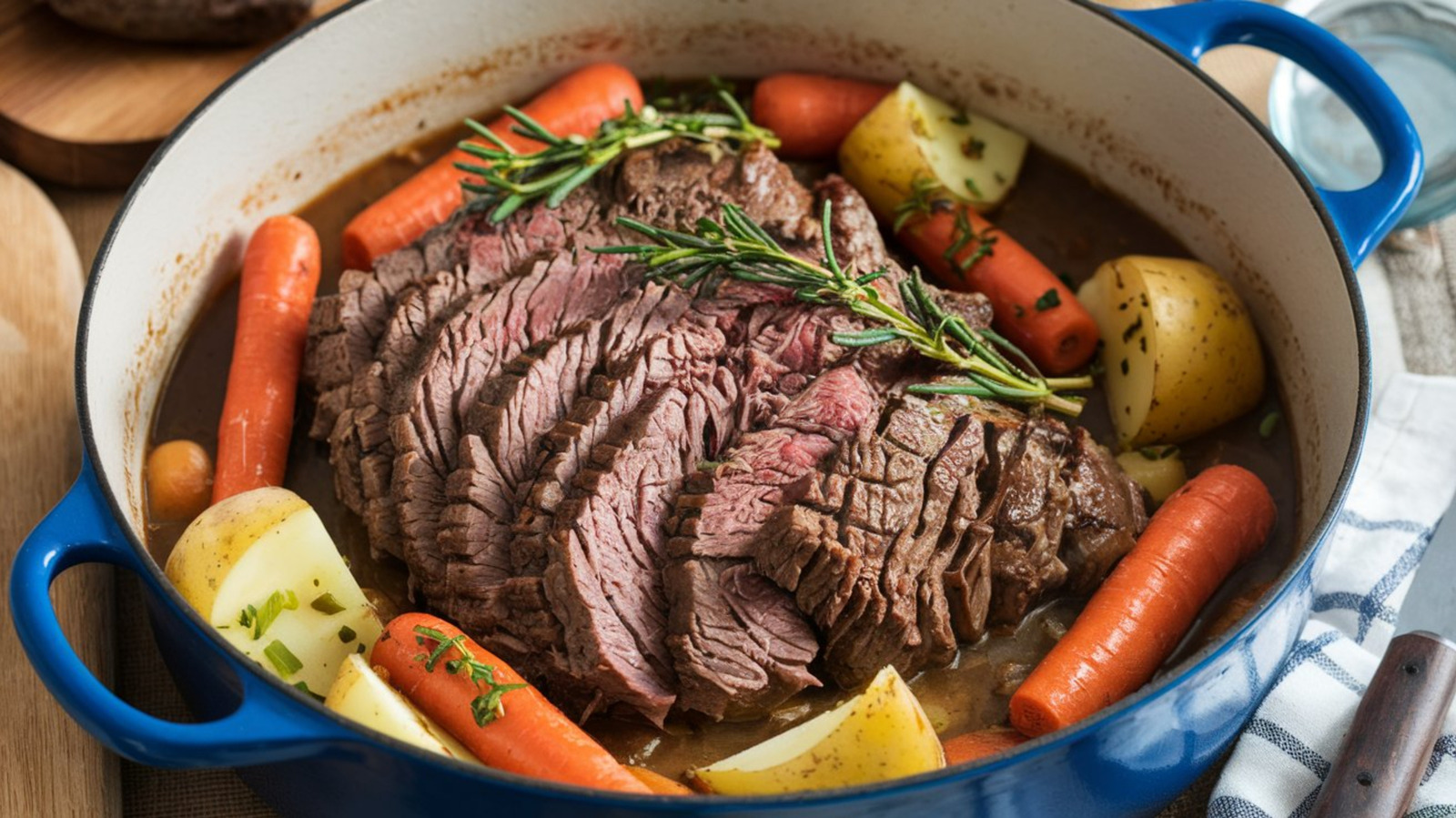
New England's Yankee pot roast — an updated name for the older "New England boiled dinner" — has roots stretching to the 1870s, when American pot-roast recipes first appeared in print. By 1944, the name was recognizable enough to land in an official U.S. Army recipe manual. The original boiled dinner, per Meg Muckenhoupt's "The Truth about Baked Beans," consisted of potatoes, rutabagas, carrots, turnips, and corned beef, boiled with salt; a decades-old New England cookbook she cites adds beets and parsnips. The Army variation stuck to tomatoes, carrots, onions, and garlic. Contemporary versions favor carrots, celery, onions, and tomatoes. The cut is flexible: a late-nineteenth-century Good Housekeeping print called for salt brisket, while modern recipes use chuck or bottom round. The dish's appeal is its refusal to fuss — sturdy vegetables, cheap meat, a long simmer, and a meal that feeds a crowd.
Garofolato
Garofolato, a traditional Roman pot roast, is vanishing from trattorias despite centuries of history. A recipe bearing all its hallmarks — manzo garofanato — appeared at the end of the eighteenth century in Francesco Leonardi's "L'Apicio Moderno." The dish uses lean cuts like eye of round (girello), culatta, or noce, which need bolstering to survive hours in the pot. Traditional recipes call for studding the beef with strips of pork fat alongside garlic and cloves — a frankly egregious amount of cloves, which define the dish's warm, non-herbaceous profile. Salt, pepper, and marjoram round out the seasoning, while onion, carrot, and celery form the vegetable base. Unlike many Mediterranean braises, garofolato leans warm rather than herbaceous, and the clove-heavy perfume is its single most distinguishing characteristic. Finding it outside Rome now requires deliberate effort, but the recipe itself is straightforward enough to revive at home.