Braises & One-Pot Mains
The Four-Pan Feijao Tropeiro: A Cowboy Stew's Journey from Saddlebag to Bar Do Careca
At Bar Do Careca in Belo Horizonte, the dish that starts with a smell and ends with a pork chop is a craft perfected by the cowboys who invented it and the man behind the pans.

The Smell That Pulls You In
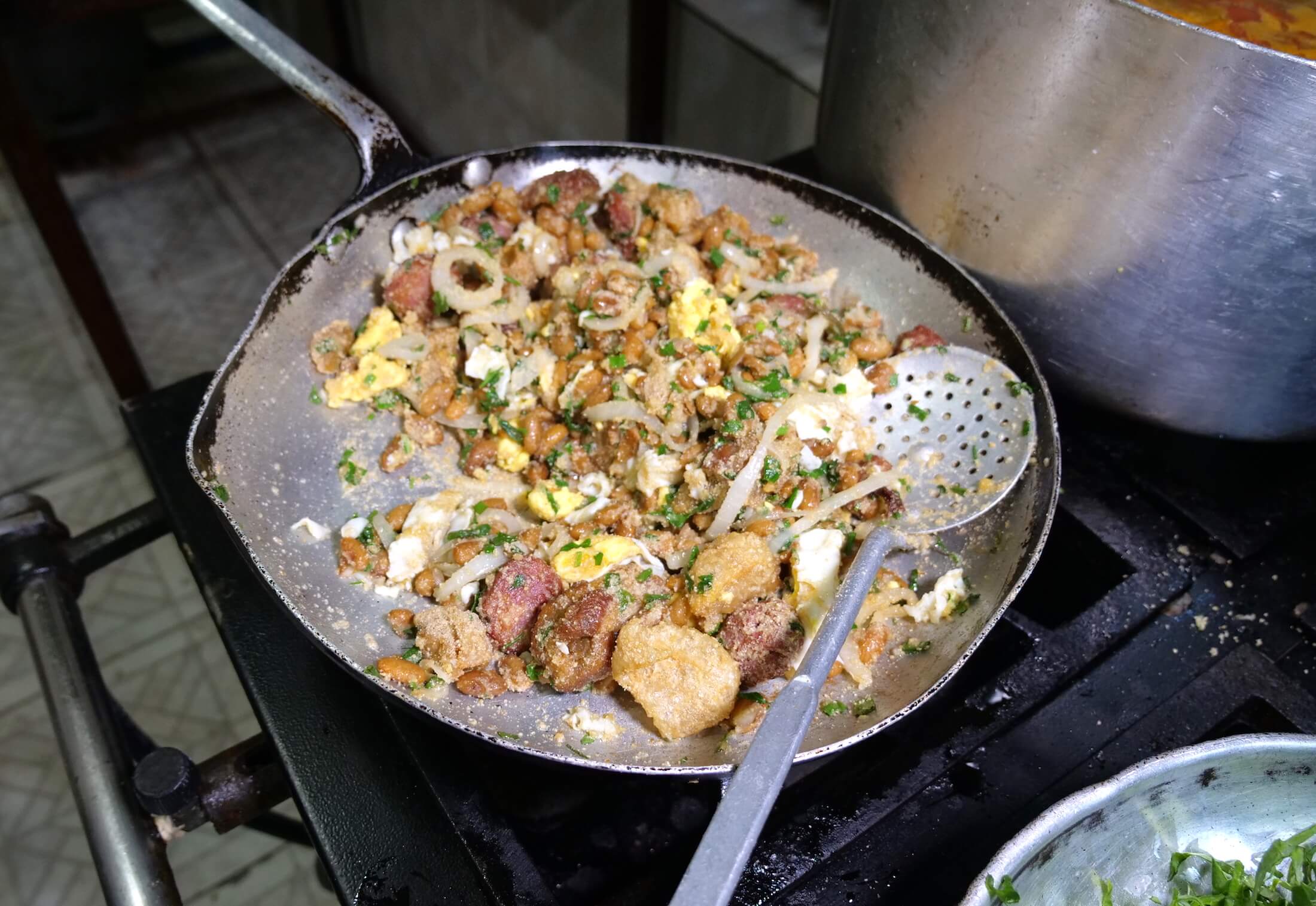
Even from the sidewalk, the smell is impossible to ignore. Frying onions, garlic, and peppers in olive oil spill out of Bar Do Careca in Belo Horizonte's quiet residential neighborhood. The pans are busy before the doors even open, and the aroma gets more insistent with each step closer. When the plate finally arrives, it comes on a silver, oblong platter: a mountain of black beans, pork sausage, pork fat, pork skin, fried onions and garlic, deep-fried eggs, and a crown of long strips of pork chop that sit on top like a garnish. The cook who assembled it told me the dish uses at least five different meats and five vegetables, all simmered into a texture that is hearty but never overwhelming. A single platter serves four people comfortably. I've never left a table sadder than when I saw the last forkful.
The Cowboys Who Invented It
The name Feijao Tropeiro points to its origins. Tropeiros were Brazil's colonial-era cowboys, driving cattle across the interior for weeks at a time. They packed light: dried jerky, nuts, flour, and manioc powder, all of which rehydrate easily. Everything went into one big pan — beans, sausage, whatever meat and starch was on hand — to create a filling, not-quite-soup, not-quite-fried stew. The dish carries no place name, just the style of cooking: feijao tropeiro means 'beans in the cowboy's way.' The 's' in Tropeiros is a reminder of the men who carried it. Today, the same principle — low tools, high calories, deep flavor — still holds on the stove at Bar Do Careca, where the recipe is a family memory as much as a menu item.
The Man Behind the Pans
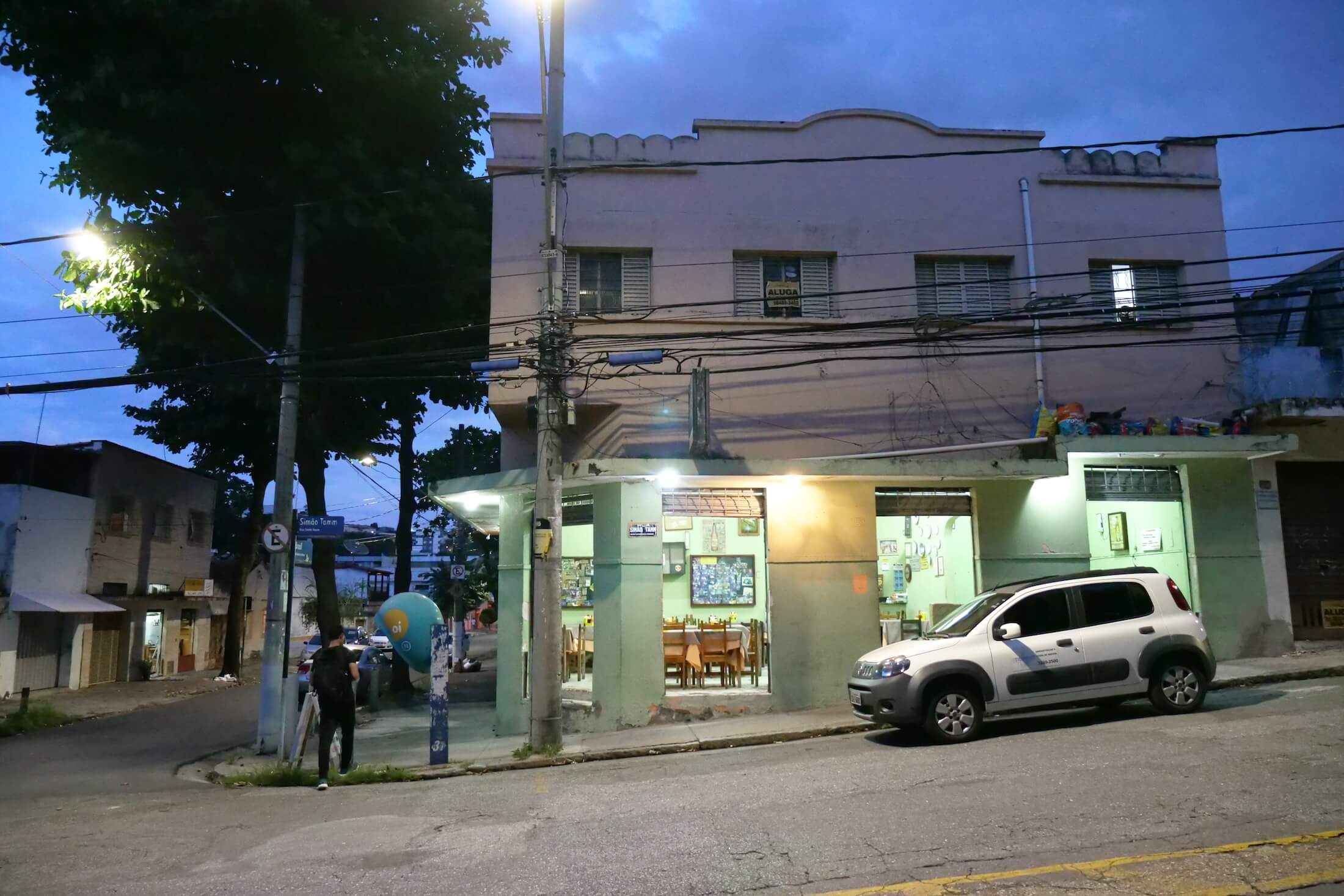
Mr. Orcino has been in the restaurant business for 60 years, the last 30 of them at Bar Do Careca with his wife. They run almost every part of the operation themselves, with two women who manage the large pots of soup that simmer all evening. On a quiet weekday, Orcino will sit with you, tell stories, and invite you to photograph the cooking process. The wall behind him holds a photograph of Anthony Bourdain, who stopped by on one of his Brazil visits. Orcino's pride is plain when he talks about his team: 'I teach them all I know,' he said, noting they've been together for three decades. The storefront gives nothing away from the street, but inside, the kitchen is open to the room, and the smell of garlic and pork hangs in the air like a promise.
The Four-Pan Method
Watching the aunties work is the show. The recipe runs across four pans. First, onions and a cup of brown beans fry together. To the side, a second pan heats olive oil, onions, and garlic — that mixture gets folded in at the end, not the beginning. The chef then chops a huge sausage and adds it, along with thick pork cracklings that are less the airy snack than a double-deep-fried chop broken into pieces. In the third pan, four deep-fried eggs, cilantro, and green onions join a handful of ultra-dry cassava powder (farinha, a coarse flour pounded from dried cassava). Broth from a massive mother pot of red beans, tomatoes, garlic, onions, and peppers keeps everything moist. The fourth pan gets fine strips of kale, fried for under a minute so they stay firm. Then assembly: kale to one side, the stew piled in, and finally, four large, thin strips of pork chop lifted from a nearby griddle to balance on top. It's a pork chop as garnish.
Beyond the Masterpiece
Feijao Tropeiro is the headliner, but Bar Do Careca's menu rewards a wider approach. The Scarlet Eggplant (jiló) is a local obsession: a firm, bitter vegetable fried with olive oil, garlic, and onions, often served with beef liver. It's not a side dish — it's a flavor anchor. The pan-cooked beef (bife de panela) arrives with steaming potatoes or manioc, the whole piece buried under garlic and onions, with a second spoon of deep-fried garlic cloves for good measure. Belo Horizonte's food culture runs on beans, meats, and yellow-and-white starches; any table at the restaurant will show all three. If you're up for a morning follow-up, the central market in the city serves a breakfast combo of sausage, chili oil, giant pork cracklings, and strong cane alcohol at its stalls.
The Practical Details
Bar Do Careca sits in a small neighborhood of Belo Horizonte, Minas Gerais. It's open Tuesday through Friday from 6 pm to midnight, Saturday from 11 am to midnight, and Sunday from 11 am to 6 pm; closed Mondays. A full meal for four people — the starch-heavy platter of Feijao Tropeiro, plus other dishes and drinks — runs about R$156, roughly US$40. The restaurant's main draw is the cooking itself: you can watch the aunties assemble the dish from a table nearby. The neighborhood is quiet, but the dining room fills with locals on weekends, so arriving early or booking ahead makes sense if you want a seat close to the action. The jiló at the central market is a separate stop, but the beef and beans here are the reason to make the trip.