Technique & Everyday Craft
Coffee's Next Flavor Depends on Who Stays on the Farm
In Tierralta, Colombia, a young man's shift from coca to coffee shows that training, not just trade, determines what ends up in your cup.
A Steadying Hand on a Mule
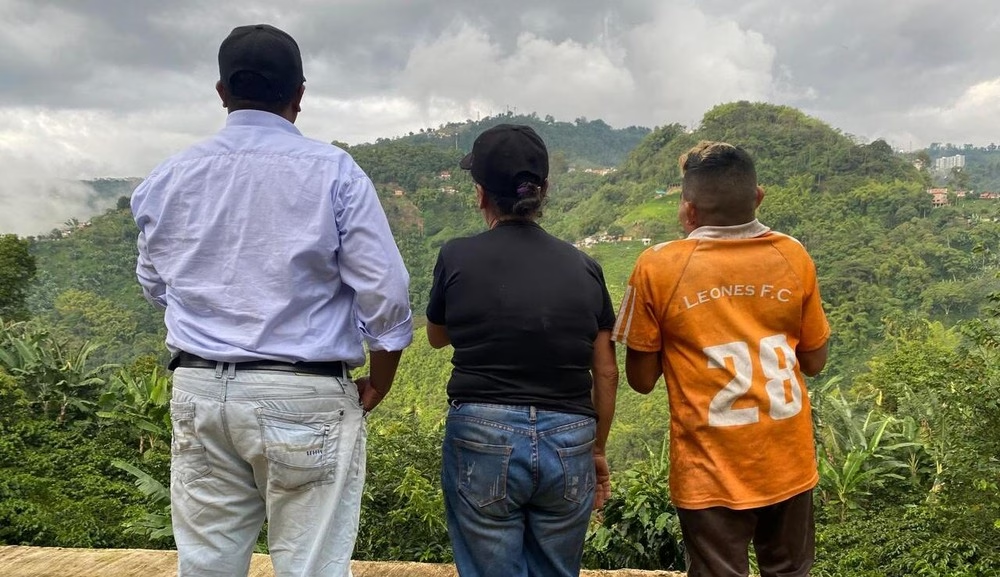
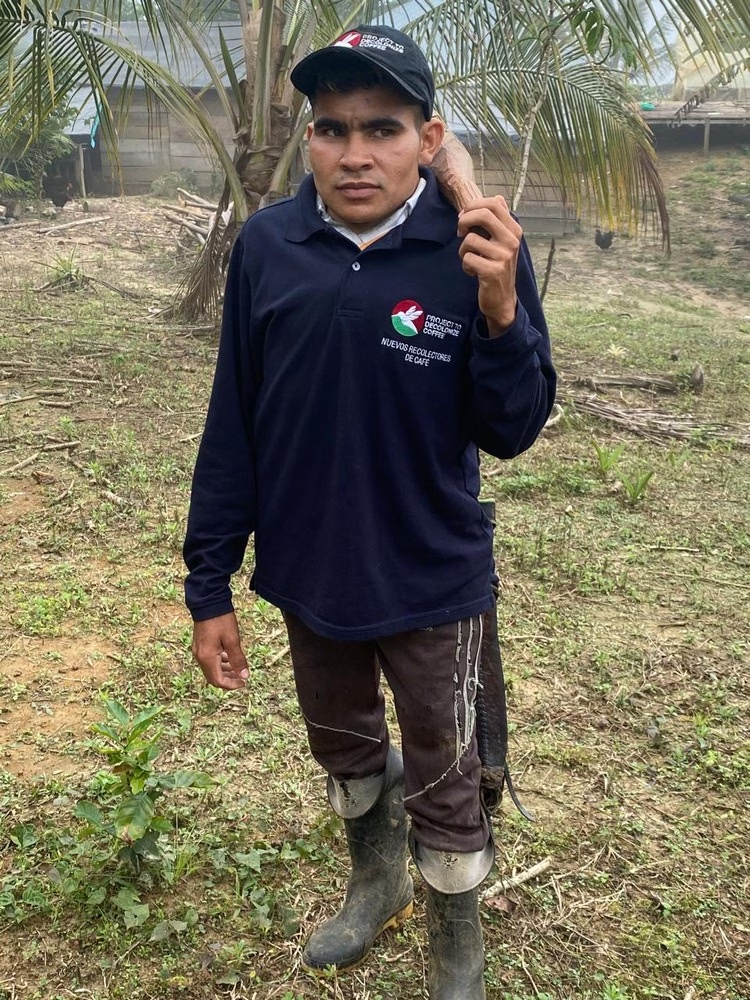
The first time Luis Mojica Perez met Jhon Arley Gomez, he was being helped onto a mule at the edge of Tierralta, Colombia. Jhon, then a farm worker and coffee picker, had spent years in the coca economy—planting, fumigating, scraping leaves—because a physical condition closed every other door. When Project to Decolonize Coffee invested in the farm that became Tierralta's first coffee producer, Jhon was hired. He joined the inaugural cohort of the Coca to Coffee program, traveling to Manizales to study picking, processing, and the technical side of production. Today he works full-time with PDC, guiding other young people. 'Before coffee, nobody in Tierralta believed I could be anything,' he says. 'Coffee gave me a way to work with dignity, to finish school, and to show the young people here that we don't have to leave, or go back to coca, to have a future.' The training he absorbed—choosing ripe cherries, controlling fermentation—directly shapes the cup he now helps others produce.
The Succession Gap in Latin America's Coffee Fields
Latin America and the Caribbean are home to more than 160 million people between the ages of 15 and 29—one in four residents, according to the Economic Commission for Latin America and the Caribbean. Yet the region's coffee producers are aging, and the question of who replaces them has no good answer in many communities. Young people see few options: the illicit economy, dangerous migration routes, or leaving agriculture altogether. Wilfred Valencia, PDC's country manager in Colombia, puts it bluntly: 'What we see every day is that young people here don't need convincing. They need a door.' That door leads to more than a paycheck; it leads to the hands-on skills—assessing ripeness, milling, drying—that define a coffee's acidity and body. Without trained successors, the craft that high-end roasters rely on erodes with each retiring farmer.
El Niño, Rain, and the Fragile Supply Chain
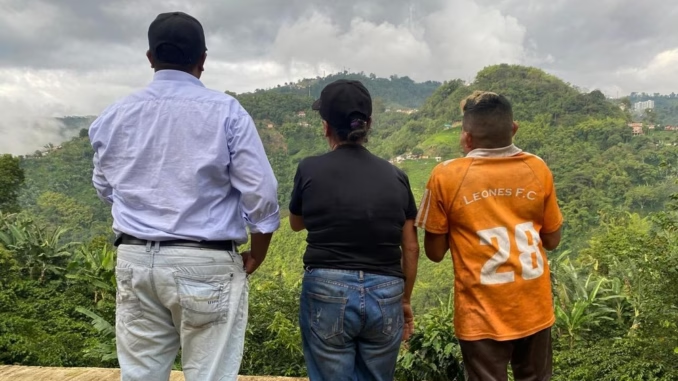
Specialty coffee's future supply faces a threat that has nothing to do with the weather. Across Latin America, producers are aging, and the region holds more than 160 million young people—the largest youth generation in its history. Yet these young people see few reasons to stay in coffee: the illicit economy pays cash today, migration routes pull them north, and a career in agriculture rarely offers stability. Without succession, the next harvests may never happen. The quality revolution of the last twenty years was built by producers who chose this crop; the next twenty depend on whether their children and neighbors make the same choice. That choice requires viable opportunities at origin, not just favorable rainfall.
Why Farm-Level Fairness Isn't Enough
Direct-trade relationships and certifications have lifted many livelihoods, but they operate farm by farm. They cannot resolve the systemic forces that push young people out: rural insecurity, missing infrastructure, no credit, and the immediate cash of an illicit economy. That's why Project to Decolonize Coffee is championing a proposal for a Special Envoy on Youth for the Americas, appointed within the Organization of American States. The envoy's mandate would target youth economic opportunity—skills, training, digital access, and alternatives to illegal work. The African Union has had such an envoy since 2018; the inter-American system has none. The design is low-bureaucracy: the OAS Secretary General can appoint an envoy under existing authority, funded by voluntary contributions. A single voice, the argument goes, could scale what PDC has achieved on a few farms in Córdoba to thousands of communities across the region.
What Roasters Can Do Right Now
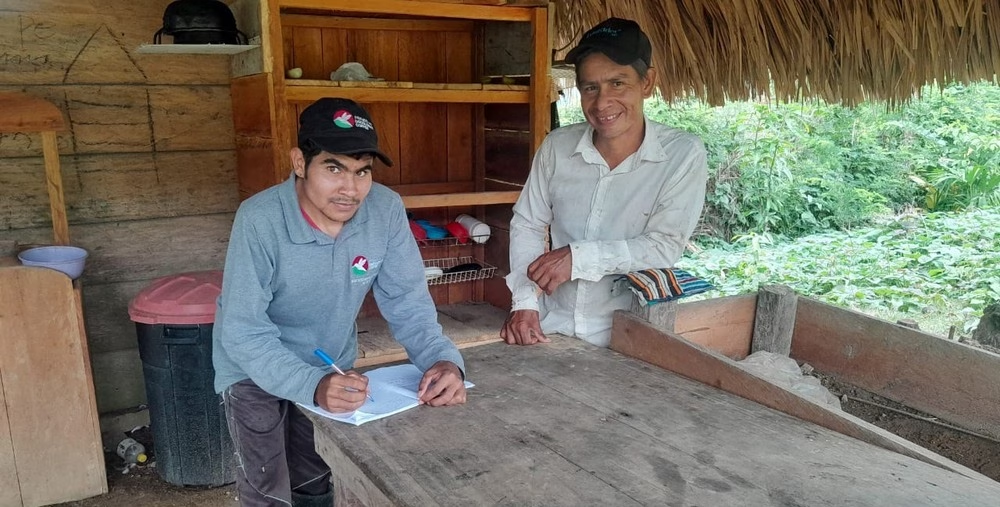
The strongest leverage roasters and importers have is to build relationships with young producers in unfamiliar, conflict-affected regions. Be patient as new coffee communities refine their techniques, and tell their stories with dignity—not charity. Inside trade associations, push the generational question so policy conversations hear it. And support the creation of a Special Envoy on Youth for the Americas, which could champion rural livelihoods like coffee at a hemispheric scale. Multi-year commitments, training, and honest feedback matter more than any certification floor. The flavor in your cup is the sum of decisions made at origin—and those decisions are made by whoever chooses to stay.