Technique & Everyday Craft
How RoasTronix Is Rebuilding the U.S. Coffee Championships From the Ground Up
After taking over as event partner in January 2026, RoasTronix CEO Arash Sassanian is redesigning the competition structure around shorter events, hands-on workshops, and a philosophy that treats every stage as a classroom.
A Sponsor Who Kept Pushing
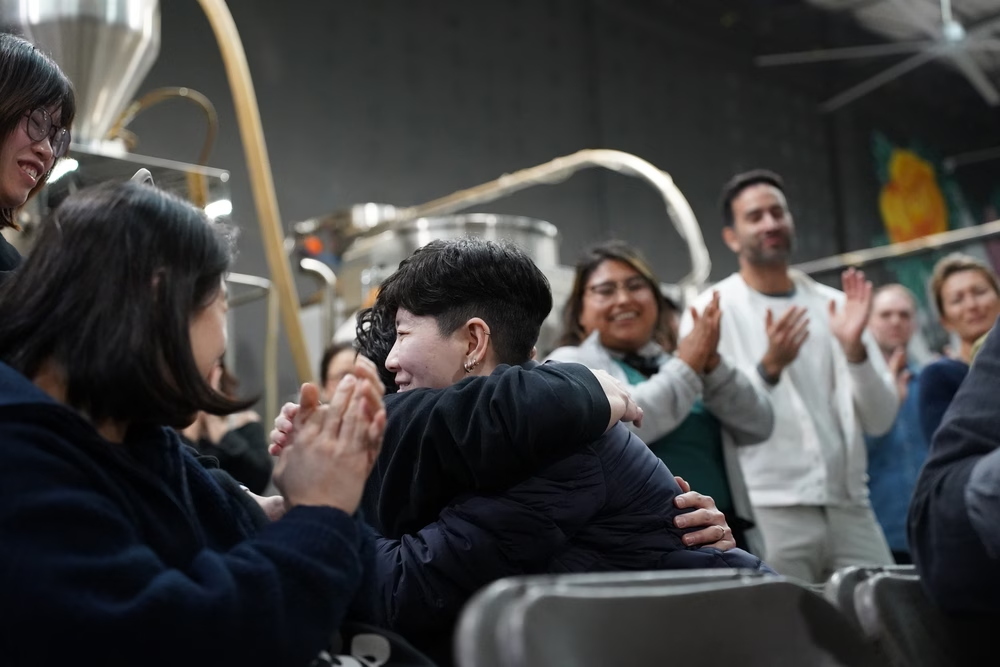
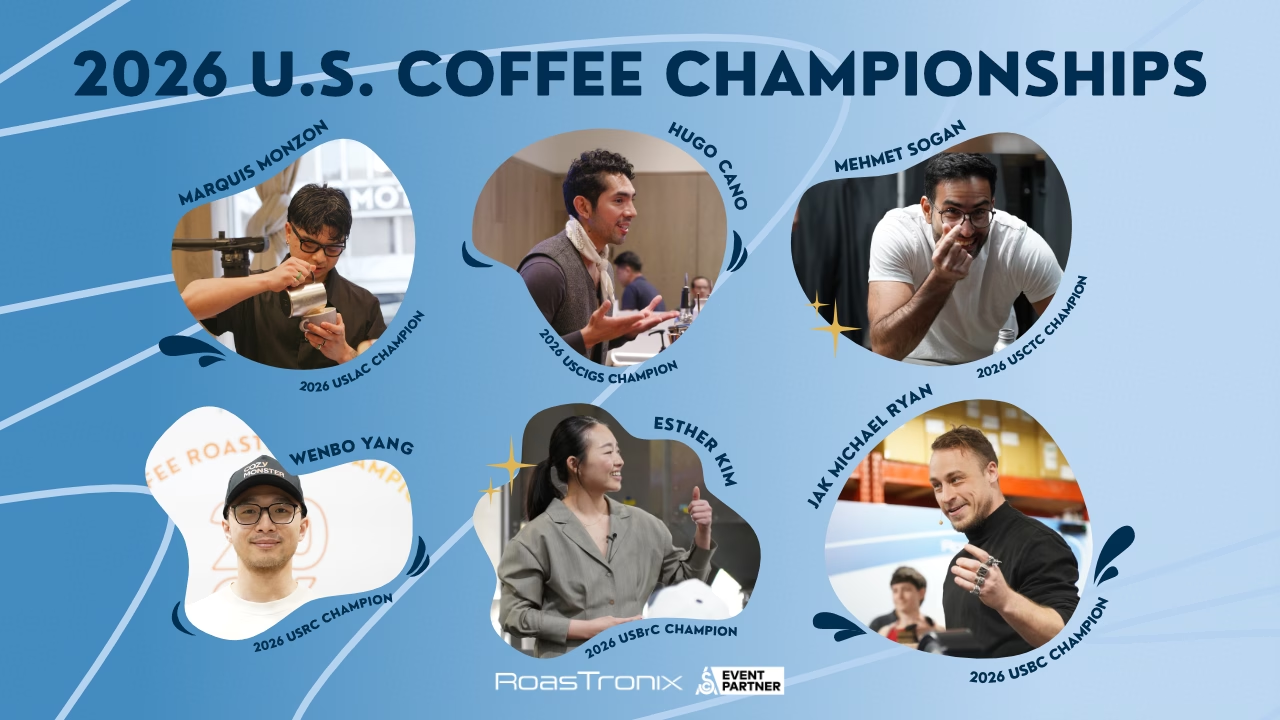
Arash Sassanian didn't set out to run the United States Coffee Championships. His path into the competition circuit began through sponsorship after he started representing Stronghold in the U.S. market, sponsoring roasting events and showing up at SCA trade shows. Those appearances led to candid feedback sessions with the Specialty Coffee Association, and those conversations eventually grew into a formal partnership. In January 2026, RoasTronix became the SCA's event partner for the USCC, taking charge of the Brewers Cup, Latte Art, Cup Tasters, Roasters, and Barista Championships.
The draw for Sassanian was never the spectacle of competition itself. He has traveled to origin countries and attended international shows in Korea, Italy, and across Europe, studying how other nations structure their events and educational programs. That research shaped his conviction that U.S. competitions need to measure themselves against the global standard, not their own history.
The U.S. Lost Its Structural Edge
American coffee competitions once ran alongside the SCA's own trade show — a level of institutional support no other country enjoyed. That arrangement gave the U.S. a head start, but it also created dependency. When that backing receded, other countries, which had built leaner and more self-sufficient competition systems from scratch, pulled ahead. The U.S. was left drifting from what had been its peak.
Now RoasTronix is trying to close that gap. Sassanian has brought in consultants to audit the rules governing both qualifying rounds and national-level competitions, with the explicit goal of producing simpler, more accessible formats. The 2026 season, while successful, moved fast and brought a wave of structural changes that competitors, judges, and organizers felt on the ground. The 2027 season is meant to be more deliberate.
Shorter Events, More Qualifiers, Fewer Travel Days
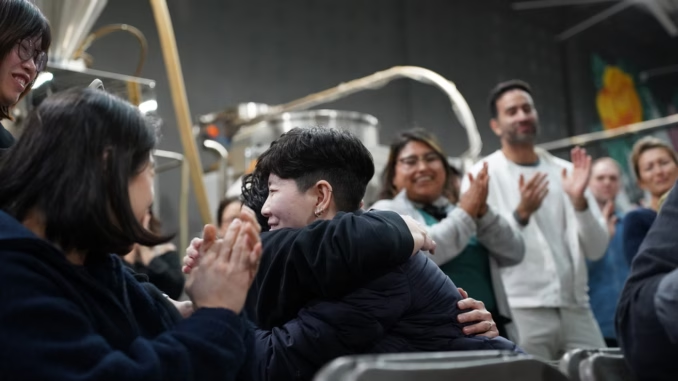
The 2027 calendar is taking shape around a core insight: multi-day competitions are exhausting and expensive for everyone involved. The Brewers Cup Championship will likely expand to three qualifying events feeding an 18-person final, down from the 32-person field in 2026. Sassanian says the goal is to shorten each event and cut the five-day travel burden that competitors and their supporters reported.
Cup Tasters saw strong demand in 2026, so the plan is three qualifiers and one national event, a format that's feasible because the competition is relatively simple to host. The Roasting Championship will move to two qualifiers and one national, reflecting the added logistical demands of venting and machine setup. Latte Art will likely stay as a single national event for now. The Coffee in Good Spirits and Barista Championships remain open questions — Sassanian is still weighing whether to introduce qualifiers or run one more year of finals only.
The Barista Championship carries its own scheduling puzzle. The next World Barista Championship is in Japan in April, but the 2026 U.S. final takes place in October in Panama, and Sassanian doesn't want the domestic final too far removed from the global stage. The window is still being worked out, likely somewhere between October and January.
Workshops as the Real Competition Infrastructure
Beyond format changes, RoasTronix is investing in what Sassanian sees as the deeper purpose of competition: education. Many of the 2027 competitions will host workshops in the lead-up to their events, building on a pilot run during the 2026 season. The intent is for these sessions to develop practical, competition-relevant skills while staying hands-on, not lecture-driven.
Sassanian also plans to bring in previous champions and educators from other countries to lead the workshops — an acknowledgment that the U.S. can learn from how international competitors and coaches approach training. For him, the competition is a vehicle for professional growth. People who have competed two or three times, he says, show measurable professional leaps. The workshops are designed to accelerate that trajectory for newcomers before they ever step onto a stage.
The Long-Term Bet on Regional Hosts
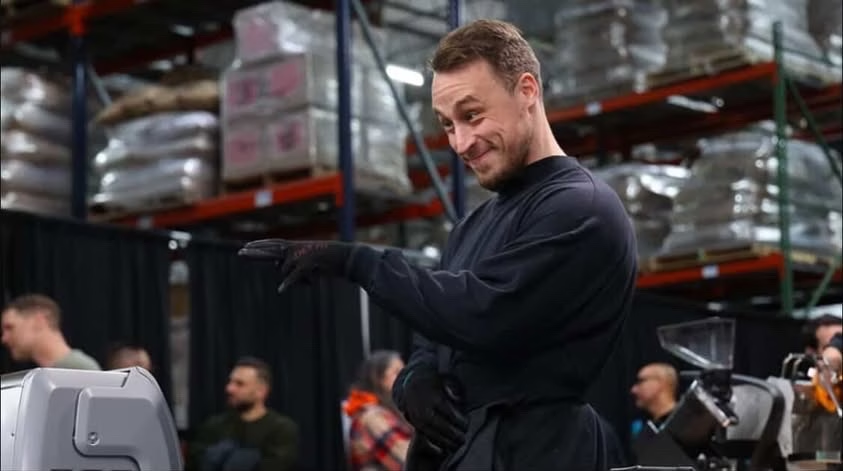
Sassanian's vision for the USCC extends well beyond 2027. His stated goal is to bring back qualifying events for every competition and to expand the network of regional hosts who partner with RoasTronix to stage them. More hosts means more accessible entry points for competitors who can't afford to travel across the country for a single qualifier.
The underlying philosophy is one Sassanian returns to repeatedly: creating value for everyone involved — competitors, producers, volunteers, judges, and the businesses that support them. Whether that means growing through sponsorship, expanding the workshop program, or rethinking how qualifiers are distributed geographically, the direction is toward a competition ecosystem that functions as professional infrastructure rather than a once-a-year event.