Braises & One-Pot Mains
How Charleston's Grocery Turns a One-Pot Rice Dish Into a Lowcountry Signature
Chef Kevin Johnson's seafood pilau draws on Carolina Gold rice, a shrimp-shell broth, and whatever the local waters bring in — and it's stayed on the menu for fifteen straight years.
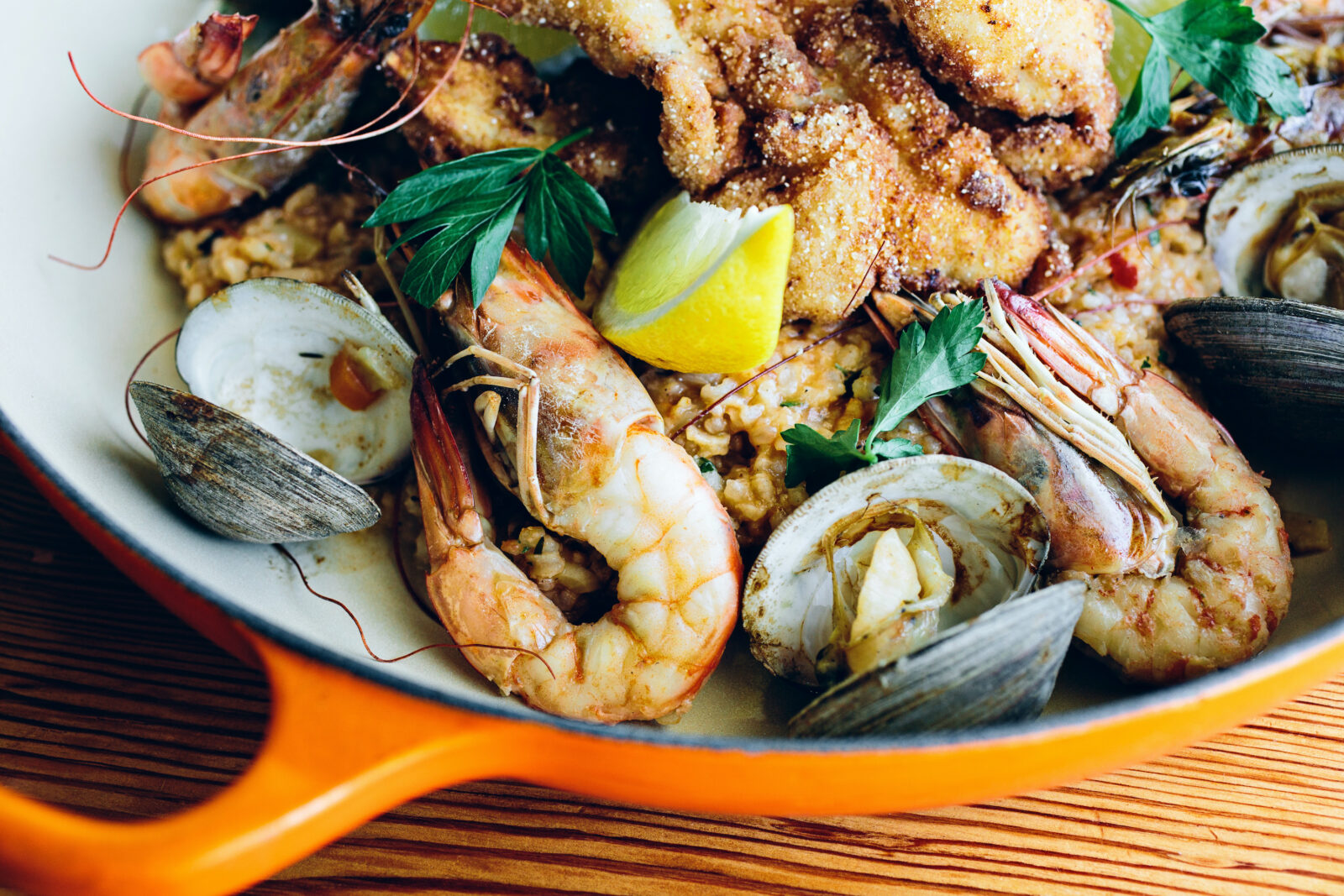
A Dish That Never Leaves the Menu
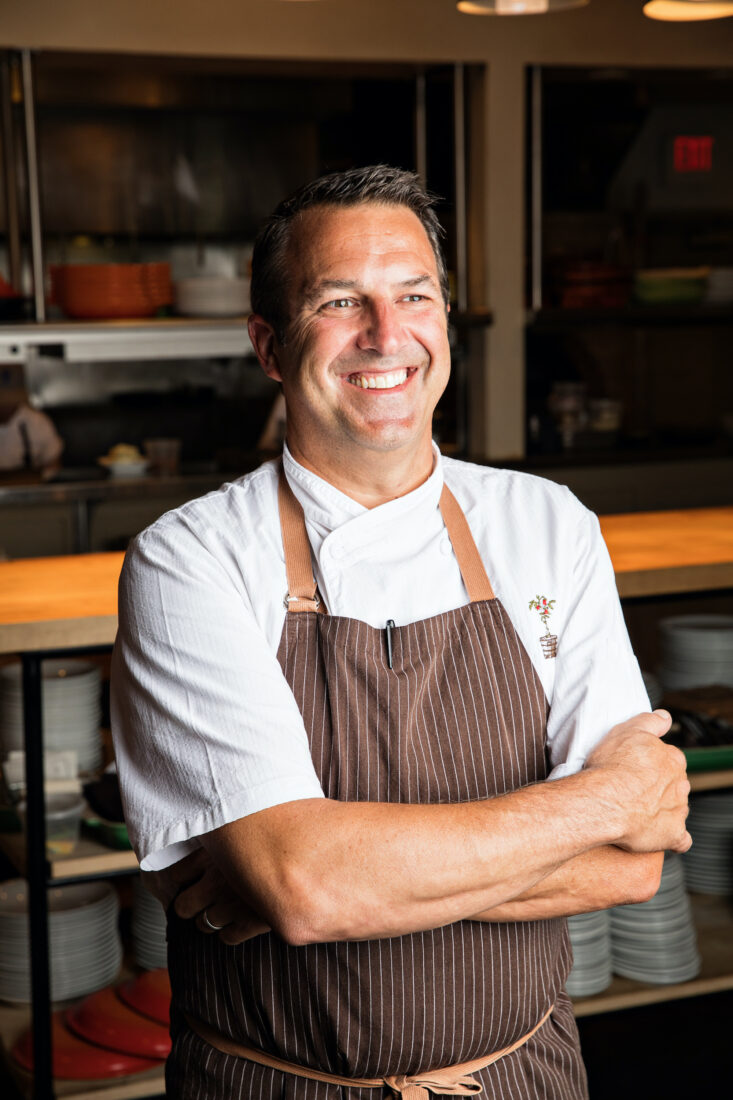
Kevin Johnson and his wife, Susan, opened the Grocery on Cannon Street in Charleston, South Carolina, in 2011. Fifteen years later, the downtown restaurant still draws a steady mix of locals and visitors — some for a full dinner, others for happy hour and the five-dollar green tomato martini that has become a calling card. Johnson's menu rotates with the seasons: summer brings green tomato carpaccio, wood-roasted peaches, shishito peppers, and tasso ham. But a handful of dishes anchor the list year-round, among them churros, fried oysters with deviled egg sauce, and a seafood pilau that has become one of the restaurant's most requested plates. "Pilau is a Lowcountry staple," Johnson says — Charleston's version of the savory one-pot rice dish, pronounced "perloh" or "perloo," traces its roots to Gullah Geechee cooking. The Grocery's take cooks Carolina gold rice in a broth of shrimp stock, white wine, and aromatics, then crowns it with roasted shrimp, roasted clams, and whatever local fish is available, fried crisp for contrast.
Carolina Gold Is the Foundation
Johnson builds his pilau on Carolina Gold rice, a grain he calls irreplaceable. "There really isn't any substitute," he says. The rice is widely celebrated for its rich texture, nutty flavor, and a starch balance that sets it apart from long-grain supermarket varieties. Carolina Gold is easy to order online — Marsh Hen Mill, a South Carolina producer, sells it directly and publishes a guide to cooking it properly. Johnson treats the rice as a canvas: "A great pilau relies on two things — great rice as the canvas, and great ingredients to be showcased." The grain's delicate structure demands attention. Skipping the wash or overcooking it produces a starchy paste on the surface rather than distinct, separate grains. That care is the difference between a pilau that reads as a composed dish and one that reads as mush.

A Shrimp-Shell Broth Changes Everything
Johnson calls a flavorful stock "a difference maker" and acknowledges it can feel time-consuming for a home cook. His solution is a shortcut that still yields deep results: simmer shrimp shells in water for thirty minutes. That alone transforms a plain rice dish into something that tastes of the coast. At the Grocery, the pilau broth layers shrimp stock with white wine and aromatics — a base that carries the flavor of the ocean into every grain. The restaurant sources its shrimp from Tarvin Seafood, a local purveyor, along with mushrooms from Raven Farm and greens from King Tides Farm. Johnson's broader philosophy is summed up in a single line: "All of us in the industry have a common goal here of celebrating our purveyors and our ingredients, and telling the story of Charleston." The shrimp-shell broth is where that philosophy meets the home kitchen — thirty minutes of simmering, and the dish starts tasting like somewhere specific.
Treat the Rice Like It's Fragile
Washing Carolina Gold until the water runs clear is not optional — it removes excess surface starch that would otherwise gum the pilau into a paste. Johnson warns against excessive stirring during cooking, which triggers the same problem. "The rice is delicate and must be cooked carefully so that it retains its structure," he says. Overcooking is the other trap. Carolina Gold's starch balance is different from that of commodity rice, and it does not forgive a few extra minutes on the heat the way a supermarket long-grain might. Johnson's approach mirrors what Marsh Hen Mill recommends: rinse thoroughly, cook gently, and pull the rice the moment it's done. The grain should be tender but still distinct, each kernel separate enough to absorb the broth without collapsing into it. That texture is what holds the pilau together — a bed of rice that can carry the weight of roasted shrimp, steamed clams, and a fillet of fried local fish without turning heavy.
Pick What Inspires You, Then Keep It Focused
Johnson's final rule is the most flexible: the starring role in a pilau can go to anything seasonal. "Seafood, poultry, and vegetables are all up for the starring role," he says. For a vegetarian version, foraged chanterelles paired with a vegetable stock deliver the earthy depth the dish needs. At the height of summer, Johnson points to okra as a natural centerpiece — its texture thickens the pilau slightly and its flavor pairs with the rice's nuttiness. The Grocery's seafood pilau draws on shrimp, clams, and whatever local fish is on hand — the shrimp and clams roasted in the wood oven, the fish fried crispy to add texture. "We want it to feel like a snapshot of what our waters have to offer," Johnson says. The constant across every version is restraint: "Keep it focused!" A pilau loaded with too many competing proteins or flavors loses the clarity that makes the dish work. One or two stars, a strong broth, well-cooked rice — that's the formula.